
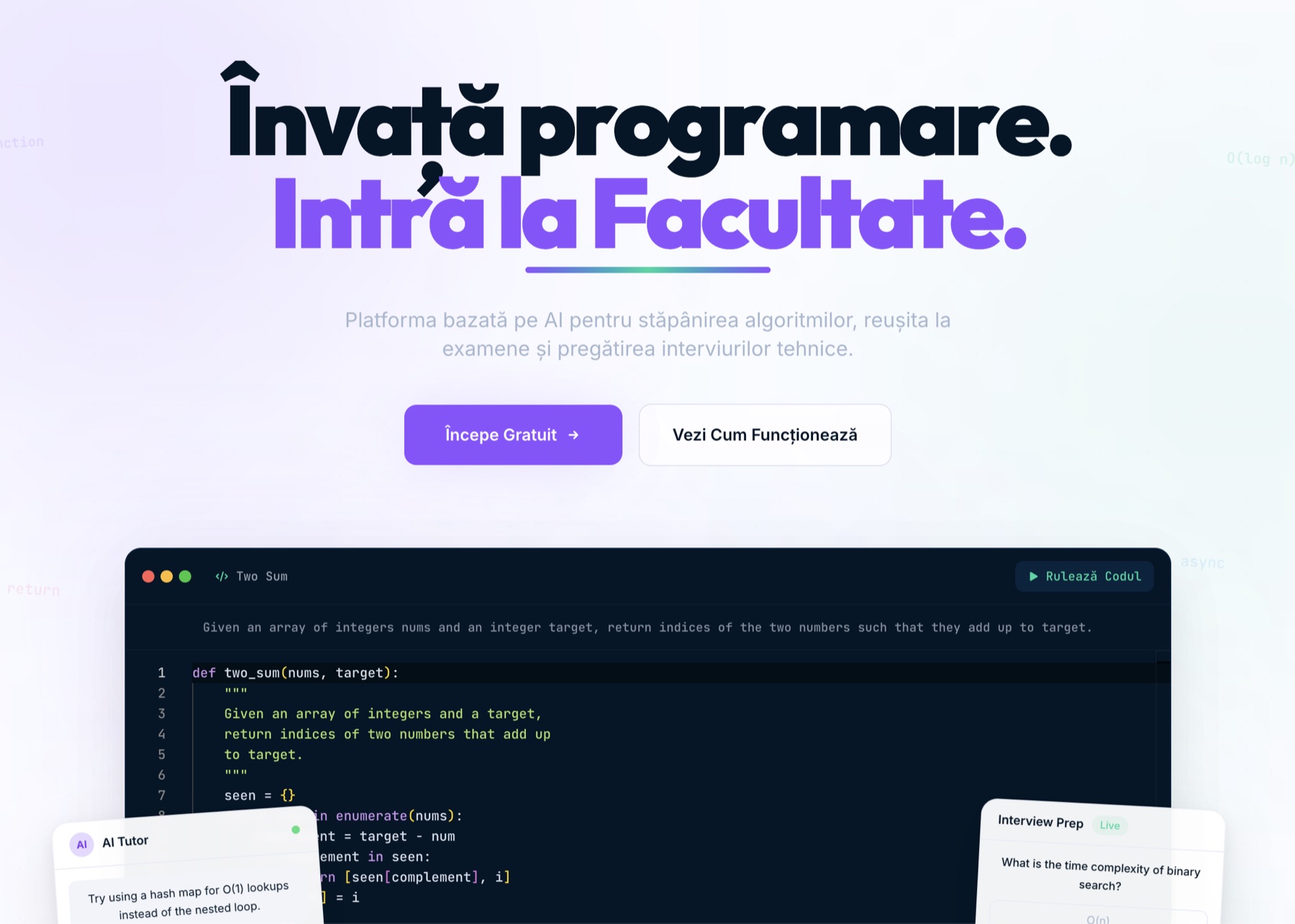
WeMentor is an AI tutor for Romanian students who study computer science, from the Bacalaureat to university admission. It explains, sets exercises and runs their code. The hard part was not getting AI to answer questions. It was making sure that answering does not replace thinking.
What we kept seeing
Students are using AI to get through school, homework and exams without learning anything. Some schools and universities have responded by banning it.
We do not think a ban is the answer. AI can speed up your work, so we do not see why it should not speed up your learning too. What matters is what the tool is used for.
So we built a version that is for learning.
Byte asks you something back
The home screen of WeMentor is a chat with Byte, our tutor. You can ask anything, in Romanian, and attach a photo of a problem from your textbook or exam paper.
Byte is told to explain one idea at a time, with a short example, and to check that you followed. In the screenshot, a question about backtracking gets a plain explanation of the principle, a small C++ example, and then a question back: does this help, or should we go deeper on some part?
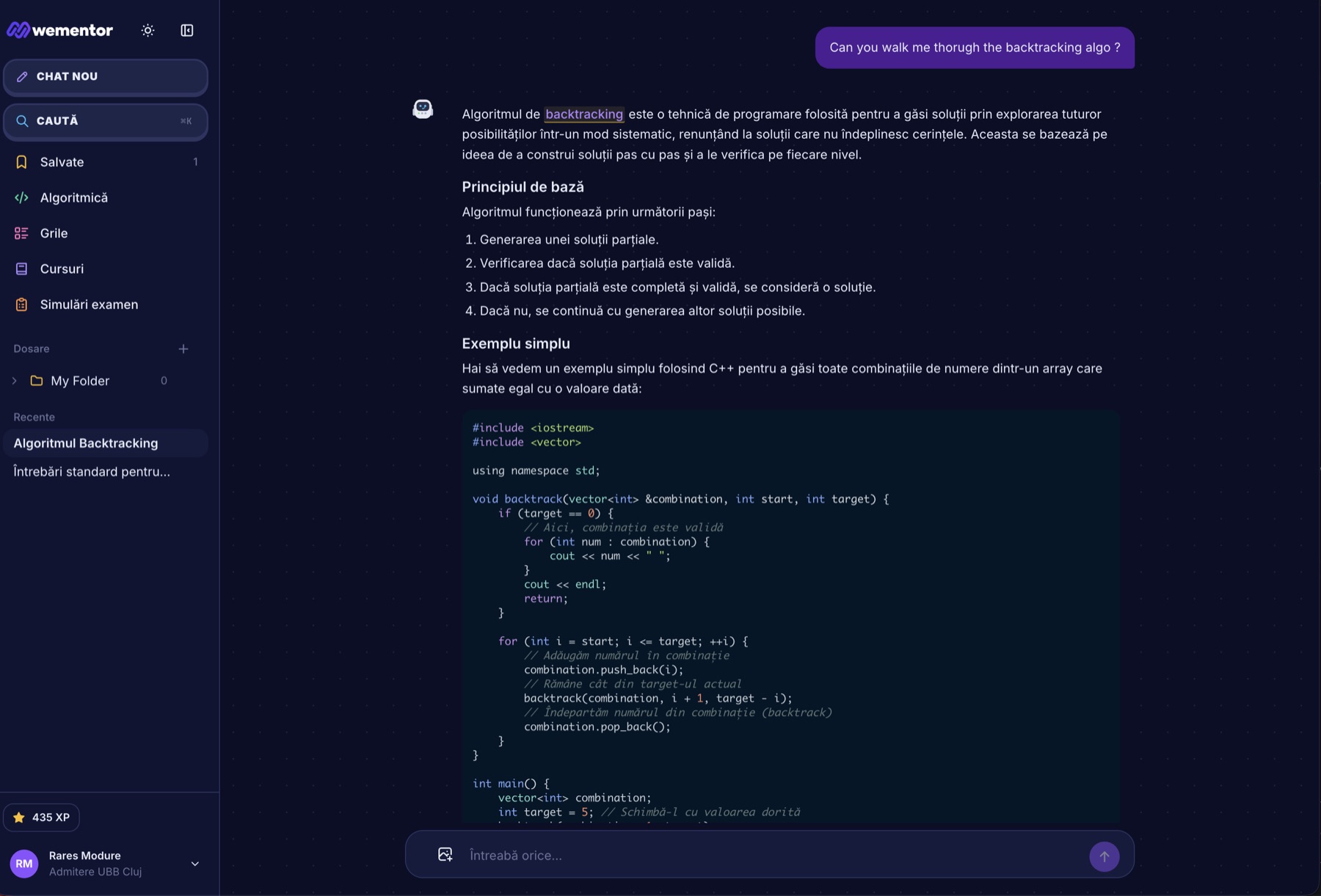
If you bring Byte a problem, it works through the approach and talks about your attempt with you. If the photo has several problems on the page, it asks which one to start with instead of solving all of them.
Practice that waits until you are ready
After an explanation, the app decides what, if anything, to offer next. It looks at whether you seem to be following: did you answer correctly, put the idea in your own words, ask a sharper question? It also looks at how far along you are on that topic.
- If you are new to a topic and we have a lesson for it, you are pointed to the lesson first. Teach before you test.
- Practice is offered once you look ready for it, judged from how you answered and your history on the topic.
- Offers are spaced out, and if you dismiss one on a topic, it does not keep coming back.
- If you ask for exercises, you get them right away. A direct request always wins.
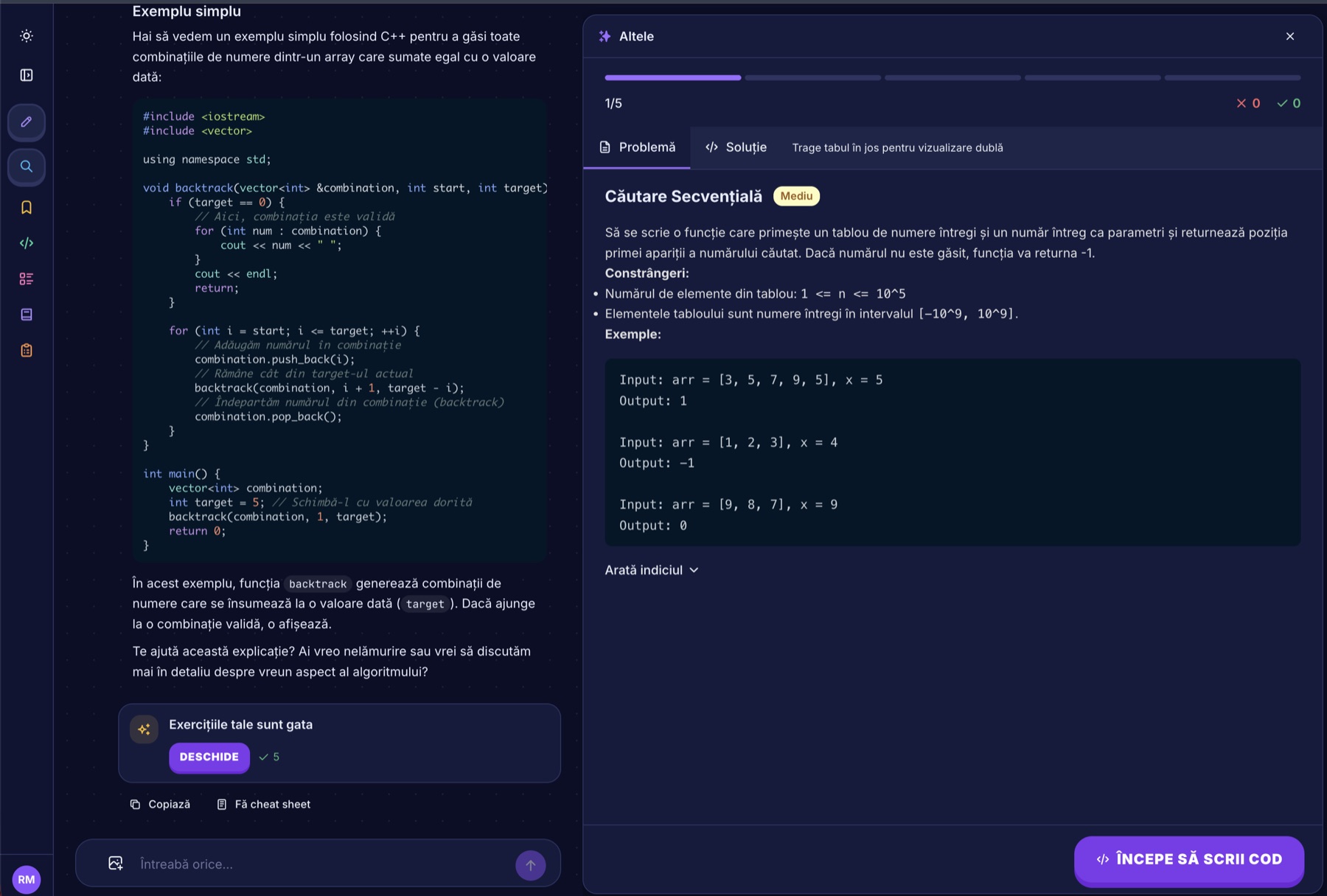
Byte does not invent exercises in the chat. The app puts them on screen under the reply, from our own collection or generated for you. In the screenshot, five exercises are waiting, with a progress bar, a running count of right and wrong answers, and a hint that stays folded until you open it.
Real problems, real code
For algorithm problems you write the code yourself. The problem screen has an editor, a place to give your own input, and a button to run your program before you submit it. Your solution is then checked against test cases.
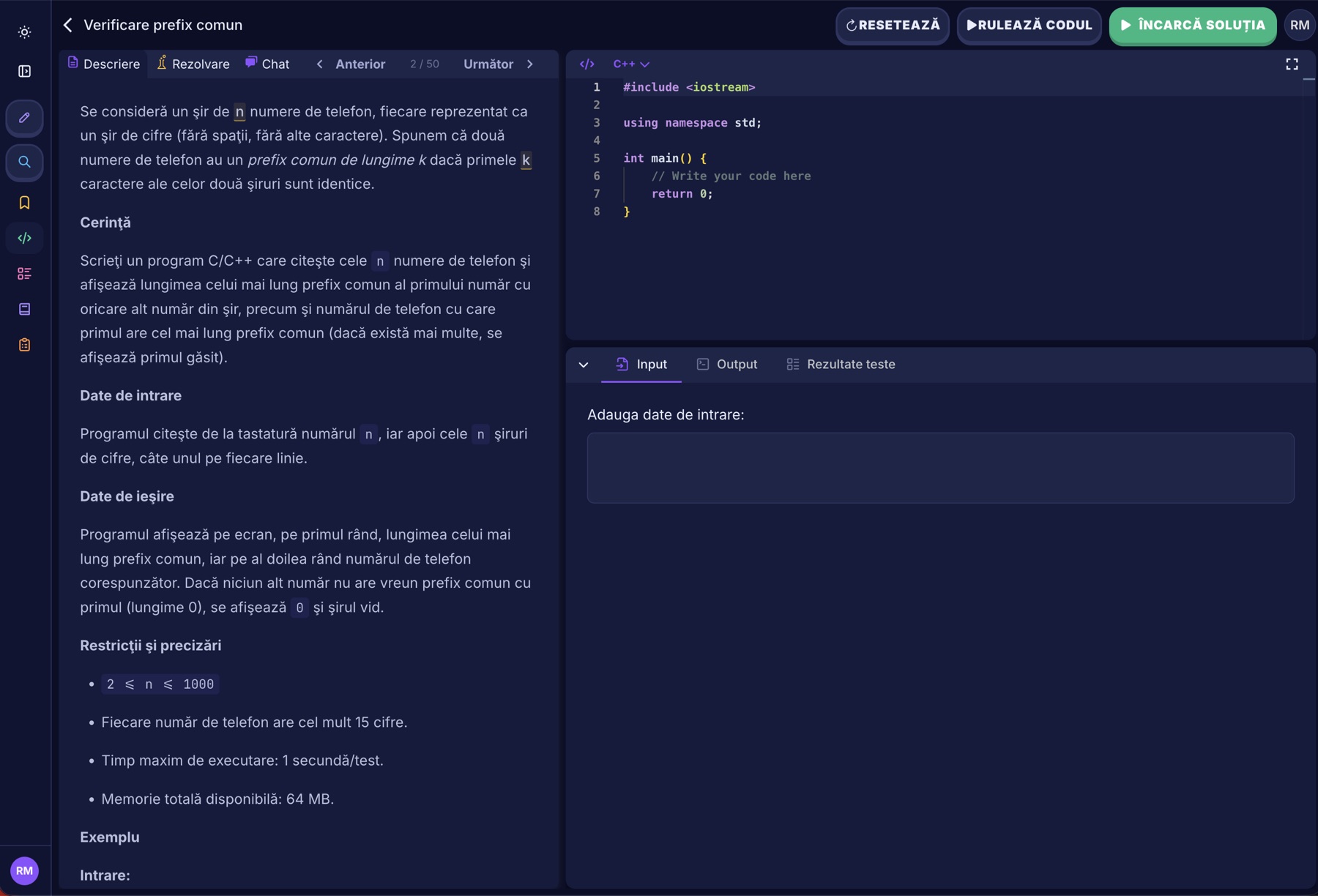
The chat is one tab away from the problem, so asking for help does not mean leaving the exercise and pasting it somewhere else.
Shaped like the exams
Learning without a goal drifts, so WeMentor is built around the exams students actually sit. You pick a track, such as the Bacalaureat in informatică or admission to a specific university, and Byte matches that curriculum, its notation and its difficulty. Examples default to C++ unless you work in another language. There are exam simulations too.
A few other things
There is a mock interview mode where an AI interviewer asks questions and scores your answers against what a real interviewer listens for, and audio lectures that read out loud in Romanian or English. Courses are generated at your level and unlock as you go.
One thing that surprised us
Early on, Byte's instructions included an example reply: "a few backtracking problems below". The model copied it. Byte started saying backtracking problems were on their way even when the question was about something else.
We now write examples with no topic in them. A model follows an example more literally than you would expect, and a small thing you wrote as an illustration can end up in front of a student as advice.
Who it is for
WeMentor is for Romanian students who want to understand programming, not only pass the next test. You can try it at wementor.ai.
Stack: React, NestJS, PostgreSQL, OpenAI models, Judge0 for running code.